

 0
0
 0
0
Inspired by Gods, Heroes and Groups: Relational Dynamics through Mythic Archetypes by Brant Elwood (Author), Aodhán Moran (Author)
Tim Rogers is a Consultant, Coach, Change and Project Manager. A 2 x curator for TEDxStHelier. He is a former Triathlete, Ironman. He is also a volunteer for Jerseys Cancer Strategy. Typical feedback … Tim’s style, manner and pragmatic approach has been very valuable. His contribution will have a positive and lasting effect on the way we work as a team.
@timhjrogers.bsky.social @timhjrogers
AMPG Change Practitioner | BeTheBusiness Mentor | ICF Trained Coach | Mediation Practitioner | First Aid for Mental Health | Certificate in Applied Therapeutic Skills
Other articles http://www.thinkingfeelingbeing.com/tools/WP_ALL_200.html
The Complex Web of Identity, Leadership, and Collective Culture
All human relationships—whether personal or professional—are woven from a rich tapestry of motives, exchanges, and shared histories. They form stories, myths, and archetypes that help us understand not only ourselves but also our place within the social fabric. These narratives shape the culture within any space—be it a meeting room, a team, or an entire organization—and transcend the mere sum of individual actions. Instead, culture emerges as a dynamic, systemic entity, sculpted by collective forces and underlying unconscious patterns.
This shared culture often exists in tension with the internal landscape of individuals. The collective’s roles, expectations, and methodologies can clash with personal aspirations, leading to internal conflicts—struggles between the need for belonging and the desire for autonomy. Externally, this friction manifests as organizational politicking, where decisions are influenced more by power dynamics and allegiances than by objective merit. The group’s narrative, consciously or unconsciously, creates archetypes—leaders, heroes, mavericks—who serve as mirrors or projections of collective hopes, fears, and unresolved conflicts.
The Persona, Shadow, and Projection
Each of us presents a persona—an adaptable mask tailored to specific circumstances and audiences. Beneath this surface lies our shadow: the hidden, often shameful or unacceptable aspects of ourselves. Is this shadow separate from who we are, or merely an unacknowledged part held in check until external pressures or internal triggers cause it to emerge? In leadership and group dynamics, this shadow often becomes a projection—an ideal or villain onto which collective hopes or fears are cast.
We tend to project our unfulfilled desires or fears onto leaders, creating symbolic figures who embody qualities we feel unable to express ourselves. Leaders, in turn, become vessels for these projections, often serving as scapegoats or messengers for the group’s unconscious needs. Leadership is rarely a prize seized; rather, it is a role conferred—sometimes temporarily—to serve collective psychological functions, fulfilling unspoken needs for guidance, stability, or rebellion.
Conferred Roles and Unconscious Collusion
Within any group, rules and archetypes are established—both consciously and unconsciously—that uphold the collective narrative. These social agreements create a framework for behavior, often rooted in shared myths and psychological needs. Members may accept or reject these rules, but most do so with a degree of complicity—agreeing to a dynamic that sustains the group’s psychic equilibrium.
Roles within the group act as conduits for processing deep emotional currents—anger, grief, alienation—that are often acted out through alliances, rivalries, or scapegoating. These patterns can become so ingrained that teams find themselves stuck in unproductive cycles, despite clear objectives. The system, designed for progress, can paradoxically trap us, as we are both architects and components of these dynamics.
Leadership at the Crossroads of Reality and Myth
Leadership inherently involves risk. When the idealized image of a leader clashes with the often harsh realities of human complexity, the leader’s position becomes precarious. Mavericks, provocateurs, or spokespersons who challenge the status quo may trigger unintended consequences—setting traps that serve the group’s unconscious needs but threaten the leader’s safety. They may be celebrated as heroes or vilified as troublemakers, depending on the collective’s shifting narrative.
Humanity, in its essence, is a fractured family. We elevate certain individuals to roles of heroism or authority, projecting our collective hopes and dreams onto them. Yet, these figures are often subjected to the same systemic forces that shape us all, and over time, we tend to chip away at their pedestal—dethroning those who become too comfortable or too powerful—reclaiming our agency and rewriting the story.
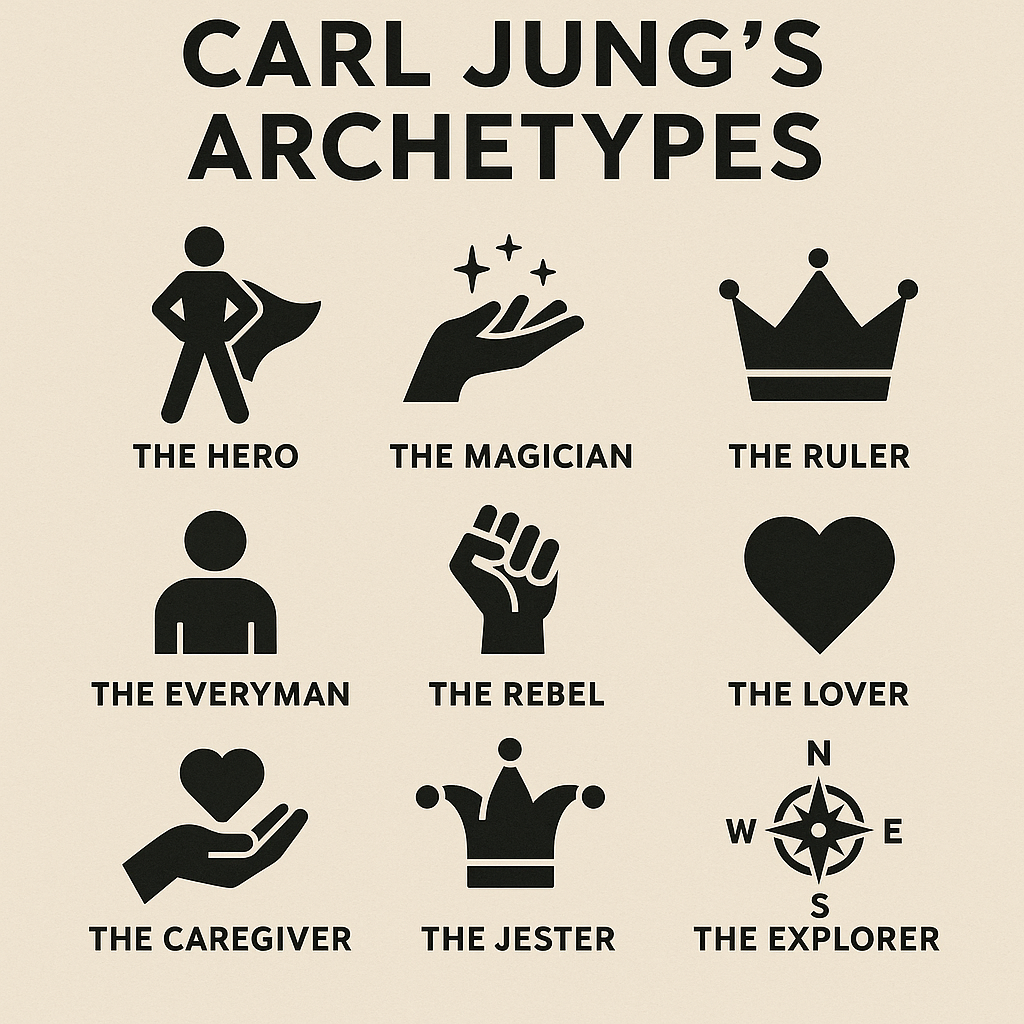
The most popular archetypes, often seen in various cultural narratives and psychological frameworks, are:
1. The Hero: Represents courage, strength, and the drive to overcome challenges. Heroes typically embark on a journey or quest, facing trials and emerging victorious, symbolizing growth and transformation.
2. The Magician: Known for wisdom, intuition, and the ability to transform reality through knowledge and understanding. The Magician archetype often symbolizes mastery over oneself and the world.
3. The Ruler: Embodies leadership, control, and responsibility. The Ruler seeks to create order and structure, often representing power, authority, and governance.
4. The Rebel: A challenger or revolutionary figure, the Rebel archetype seeks to overturn established systems, challenge authority, and instigate change.
5. The Lover: Focused on passion, connection, and relationships, the Lover archetype is driven by love, beauty, and the pursuit of harmony in connections with others.
6. The Caregiver: Represents compassion, nurturing, and protection. The Caregiver archetype often embodies selflessness and the desire to support and care for others.
7. The Jester: Known for humor, playfulness, and light-heartedness, the Jester brings joy and often uses wit and humor to provide perspective or insight.
8. The Explorer: Driven by curiosity and the need for adventure, the Explorer archetype seeks freedom, new experiences, and the unknown. It represents the quest for discovery and personal growth.
These archetypes frequently appear in both individual and collective psychology, influencing behavior, leadership styles, and the roles people assume in their personal and professional lives.
Understanding Family and Collective Dynamics
Navigating these complex dynamics requires insight into family patterns—whether within a household, an organization, or our inner selves. These patterns are woven into the collective narrative, often reinforced by what is accepted as truth and what remains unchallenged. Membership in any group is often secured through unspoken agreements—concessions to the collective’s expectations and myths.
Ultimately, applying archetypal understanding, recognizing underlying myths, and exploring psychological truths can illuminate the unseen currents shaping group behavior. By acknowledging the systemic nature of these dynamics, we can better navigate the delicate interplay of identity, leadership, and culture—transforming conflict into opportunity and chaos into coherence.


